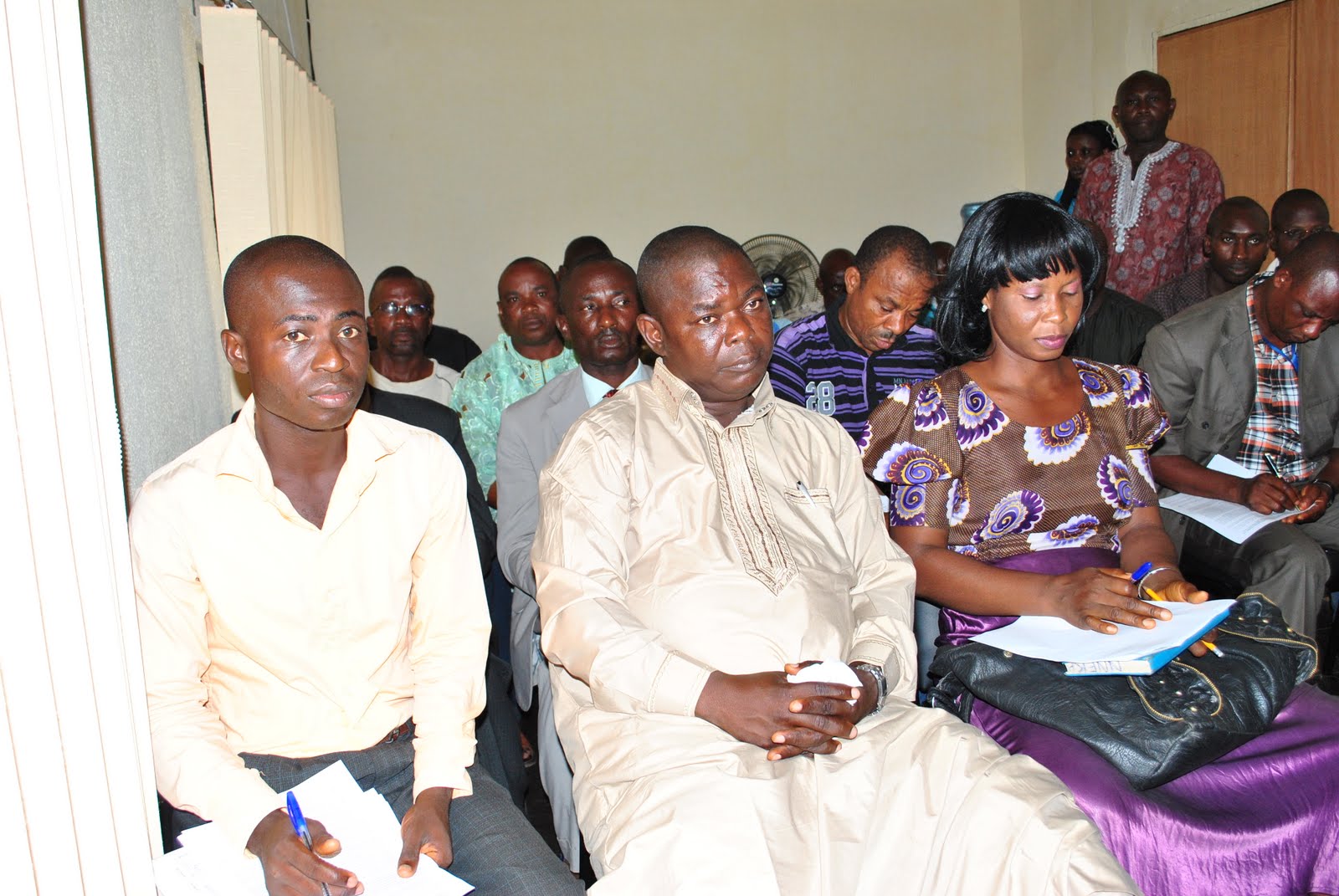
A PAPER PRESENTION AT CLEEN FOUNDATION YOUTH AND POLICE FORUM IN LAGOS STATE AREA B COMMAND, APAPA HELD ON TUESDAY 21ST JUNE, 2011.
PRESENTER: Olutoyin Falade – Executive Director, Innovative Strategy for Human Development (ISHD)
INTRODUCTION
Improving relations between police and youth is part of the Community Relations Service which all relevant stakeholders must be committed to at all times. This becomes expedient in any society because of the importance placed on the two groups – one is the future of a nation while the other secures a nation.
The two groups under this discourse have been known to point accusing finger to each other on many issues bothering on the peace and security of our country, Nigeria. How long will they continue to accuse each other without having a way forward?
In order to avoid more incidences of violence that have been recorded in the past as a result of lack of understanding between our youth and police, the concept Conflict Management, which is also a skill will be exposed for our understanding in this discourse.
WHAT IS CONFLICT?
Conflict has been defined by many people based on their ideas, beliefs, values and experiences in life. One can bet if these definitions are not anything to lean on because those ideas, beliefs, values and experiences are opined by negative feelings and attitudes.
Conflict is when two or more values, perspectives and opinions are contradictory in nature and perform period. Getting the most out of diversity means often-contradictory values, perspectives and opinions haven't been aligned or agreed about yet, including:
1. Within yourself when you're not living according to your values;
2. When your values and perspectives are threatened; or
3. Discomfort from fear of the unknown or from lack of fulfillment.
Conflict may be defined as a struggle or contest between people with opposing needs, ideas, beliefs, values, or goals. The Chinese defines Conflict as an “Opportunity for Change”. Conflict on teams is inevitable; however, the results of conflict are not predetermined. Conflict might escalate and lead to nonproductive results, or conflict can be beneficially resolved and lead to quality final products. Therefore, learning to manage conflict is integral to a high-performance team. Although very few people go looking for conflict, more often than not, conflict results because of miscommunication between people with regard to their needs, ideas, beliefs, goals, or values. Conflict management is the principle that all conflicts cannot necessarily be resolved, but learning how to manage conflicts can decrease the odds of nonproductive escalation. Conflict management involves acquiring skills related to conflict resolution, self-awareness about environment, conflict modes, conflict communication skills, and establishing a structure for management of conflict in your life.
UNDERSTANDING CONFLICT MANAGEMENT
Conflict management entails a lot of activities/interventions which are proactive and result- oriented by the parties involved in a conflict and/or by a third party. Conflict management helps to us to identify and understanding the following:
• The causes of conflict
• The stages of conflict
• The parties in a conflict
• Conflict handling styles
CAUSES OF CONFLICT
Many causes of conflicts have identified ranging from land/border dispute to political dispute. For this discourse, three categories of causes of conflict are highlighted for understanding, as follows:
1. Resources
This is physical, which means it can be finite and infinite, countable and uncountable, but a source of conflict due to greed, inadequate planning, uneven distribution, occurrence of natural disasters which leads to migration to mention a few. Examples of such disputes are land dispute, fuel crisis and water-shortage.
2. Values
Our values are based on our religious and moral beliefs, which differ from place to place. What is one person’s value may not go for another person and that being the beginning of trouble if not handled properly. Take for example, one person values NEATNESS and shares a room with someone who is all the time untidy – what do you think the outcome will be (it can be imagined, right)
3. Psychological
This has to do with one’s psychic that is emotional and behavioral characteristics of any person. Our feeling of happiness, self-worth, life satisfaction and fulfillment becomes important. The feelings to love and be loved, as well as sense of belongingness cannot be ruled out. Where an individual finds it difficult to express these feelings it can create conflicts. Our personality types can also be another cause if not handled well. One person is a talkative and the other is quite (extroverts and introverts) which we call personality clash.
4. Others are mis-information, wrong information, inadequate information and perception. Communication of course cannot be ruled out, too. Therefore, watch what you say, how you say it, where you say it, when you say it and who you say it to, because you might not be able to handle it.
CONFLICT HANDLING STYLES
Three types of conflict handling styles shall be considered for this discourse, they are;
1. Avoidance
Pretend it is not there or ignore it.
a. Use it when it simply is not worth the effort to argue. Usually this approach tends
to worsen the conflict over time.
2. Confrontation
Confrontation involves one of the parties involved in a conflict facing the other for an explanation for carrying out an act that is not acceptable. This must be done without violence in order to have a good result.
3. Joint Problem Solving. Focus on working together.
a. Use when the goal is to meet as many current needs as possible by using mutual
resources. This approach sometimes raises new mutual needs.
b. Use when the goal is to cultivate ownership and commitment.
TOOLS FOR CONFLICT MANAGEMENT AND CONFLICT RESOLUTION
These tools are also very important in handling conflict for youth and police of the 21st Century as follows:
• Communication
• Negotiation
• Mediation
• Arbitration
• Litigation
CONCLUSION
Both groups are supposed to work with these conflict management skills for a better relationship in our society.
Wednesday, 29 June 2011

Thursday, 23 June 2011
Press Release: Commencement of 2011 National Crime and Safety Survey

The CLEEN Foundation wishes to announce the commencement of the 2011 edition of its National Crime and Safety Survey. The survey will last for three weeks, covering the 36 states of Nigeria and Abuja, the Federal Capital.
Sampling and Method of Survey
Ten thousand respondents will be interviewed in their homes using personal face-to-face interview and multi-stage sampling technique. To ensure adequate representation of adult Nigerian population, probability sampling procedure will be used to neutralize any known form of bias that may affect the findings of the study. Respondents will be males and females, age 18 years and above. Interviews will be conducted throughout week days and weekends, to ensure that respondents of all lifestyles are included in the sample.
Required information will be collected using structured close-ended questionnaire. The preference for closed-ended questions is informed by the fact they are less time consuming for the respondents to complete and can be easily be keyed into the computer. The questionnaire is designed to capture respondents’ household/personal experiences of crime victimization, human rights violations, road accidents; perceptions of safety; police/security agencies response to crime and general perception of crime and the criminal justice system. The questionnaire is divided into 10 sections. Sections 1-3 deal with respondents’ experiences of crime victimization including sexual crimes. Section 4 is on economic and financial crimes with special focus on measuring levels of corruption in the country over the past three years. Section 5 focuses on fear of crime and perception of safety, measuring how fearful the respondents are of becoming a victim of any type of crime and its impact on their social behaviour. Section 6 looks at community response to crime, trying to find out the measures the respondents take to protect themselves in their homes. Section 7 is road safety and accidents, looking at the level of road accidents in Nigeria and respondents attitudes to road safety issues. Section 8 measures public perception of governments and trust in public authorities in Nigeria. Section 9 is on general perception of crime and criminal justice institutions. Finally, section 10 provides questions that would enable quantitative assessment of human rights
situation in Nigeria.
Objectives
The objectives of the survey are to:
• Generate reliable complementary data to official statistics on crime, crime levels, perceptions of safety, as well as their geographic, gender and socioeconomic distributions, which would the police, Federal Road Safety Commission and other law enforcement agencies in better deployment of resources.
• Assess the level of community interest and involvement in crime prevention and crime target hardening measures.
• Assess attitude of members of the public to justice institutions
The Importance of Crime Victimization Surveys
Crime victimization surveys are conducted around the world because of problems associated with official statistics on crimes. Official crime statistics produced by the police, prisons and the courts are the indicators of criminality and victimization commonly available in most societies. However, such statistics often do not present the whole picture of crime due to dark figures (unreported crimes) and grey figures (reported but unrecorded crimes). In response to the deficiencies associated with official statistics on crime, criminologists developed the crime victimization survey, which involves the study of a sample of a given population to obtain data on the extent of criminal victimization during a particular period, usually during the past year - whether or not detected by or reported
to the police.
to the police.
Questionnaires are designed to gather information on respondents’ experience of criminal victimization. The surveys provide rich data for understanding the distribution of criminal victimization and the socio-demographic characteristics of victims and criminals; offer information for better understanding of criminality; and consequences of victimization; and extent of fear of crime among different groups in different study locations.
Field Administration of Questionnaire
Field Administration of Questionnaire
The field administration of the survey questionnaire is being carried out by the Practical Sampling International (PSI), a reputable social research firm that has worked with the CLEEN Foundation over the years and has conducted similar surveys local and international organizations.
Our Appeal
Our Appeal
We appeal to members of the public to welcome the respondents when they visit and provide truthful answers to the questions asked as they will help policy makers in formulation of better policies on crime and safety issues in Nigeria. If in doubt of the identity of the interviewers please contact the survey coordinator, Ms. Shola Omotosho at the following number: 0803-5054066 or e-mail address: shola.omotosho@cleen.org.
If you are interested in receiving summary report of the findings please contact us.
Friday, 17 June 2011
PRESS BRIEFING TO MARK THE COMMENCEMENT OF HUMAN RIGHTS TRAINING FOR PERSONNEL OF THE CID, IMO STATE POLICE COMMAND, ORGANISED BY CLEEN FOUNDATION, THIS 9TH DAY OF JUNE, 2011

 Good morning your Excellency, the Executive Governor of Imo State; good morning honourable Commissioner of Police Imo State; good morning officers of the Nigeria Police Force here present, and good morning to you distinguished ladies and gentlemen of the press.
It is my pleasure to welcome you to this press briefing to mark the commencement of this landmark training progamme for the personnel of the CID, Imo State Police Command being organized by CLEEN Foundation.
CLEEN Foundation is a non-governmental organization established in January 1998 with the mission of promoting public safety, security, accessible justice and human rights through the strategies of empirical research, legislative advocacy, demonstration programmes and publications in partnership with government and civil society. CLEEN Foundation, in view of the security and governance challenges facing the Southeast took the initiative of setting up this Southeast Regional office situate at the centrally located city of Owerri. This Southeast office of CLEEN Foundation was officially inaugurated on the 24th of February, 2011.

There is no gainsaying the fact that the state of insecurity in the Southeast has worsened over the past five years with increasing spate of violence exhibited in kidnapping and political contestation. Statistics from the 2010 national crime victimization survey conducted by the CLEEN Foundation indicate that Ebonyi, Abia and Imo States have highest levels of kidnapping in Nigeria (CLEEN Foundation, 2010). Similarly, in the 2006 edition of the survey Abia State ranked first in armed robbery (Alemika and Chukwuma, 2007). Between 2009 and 2010, there was hardly a day that passed without cases of violent robbery and kidnapping reported in the area. The villages are no exception as there is increasingly no statistically significant difference between the levels of crime (especially armed robbery and kidnapping) recorded in the cities and those in the villages (Chukwuma, 2009). For the indigenes, going home has become an ordeal and preparations for it require the kind of security arrangements you would expect in war torn places like Somalia, Sudan and Congo DRC.
 Consequently, public and private enterprises that operated in the region and provided jobs to the youths in the past are closing down in droves and thus complicating youth unemployment in the area, which is the highest in the country at 60%. While private businesses are leaving because of the security situation and poor physical infrastructure, their public counterparts are shutting down mainly as a result of mismanagement, corruption and poor corporate governance among other malfeasance.
In summary the objectives of this Regional office include:
To improve local understanding in the Southeast about the linkage between bad governance and rising state of insecurity in the region as well as their impact on local economy and poverty metrics.
To facilitate critical stakeholders’ consensus and buy-in on a set of priority issues for urgent attention in responding to bad governance and insecurity in the region and piloting their implementation at the local government levels.
To facilitate the adoption of right-based approach to community development by town unions and community development associations in the southeast.
To continuously develop the capacity of law enforcement and security apparata to the end of adopting more effective and efficient crime prevention and control strategies towards enhancing security of lives and property in the region.
To encourage civil society organizations in the southeast to work more professionally and collaboratively.
 In view of our commitment to enhancing safety and security, Cleen Foundation engaged the Commissioner of Police Imo State and the Assistant Commissioner of Police in-charge of the Criminal Investigations Department of Imo Police Command, and emerging from our meetings was a consensus on the need to build the capacity of the Police especially officials of the CID on right-based approach to policing. Respect for Human Rights is at the heart of every civilized society, and the tenets of democracy further strengthens the need for government institutions to be responsive to the rights of the people because democracy is a government that derives its authority and legitimacy from the people.
Adopting a right-based approach to policing will not only ensure the democratization of the Police institution in Nigeria but also will promote its image and integrity, and most importantly improve its professionalism and effectiveness. It is on this premise that Cleen Foundation undertook to train the personnel of the CID of Imo State Police Command on human rights. The CID is usually a department that is often challenged by the need to solve crime problems very urgently, and respecting the rights of suspects in such circumstances could pose serious dilemma for them. This training is therefore aimed at highlighting the extent of Police powers vis-à-vis human rights, and how Police officers can carry out their legal duties without violating those fundamental human rights some of which have internationally assumed the status of jus cogens norms. Also incorporated into this training are modules on conflict management, listening and anger management skills, which are crucial to effective policing and resolution of potential crime situations.
Cleen Foundation is offering this training free of charge for the Police. Improving the capacity of the Police to the end of promoting security of lives and property is a matter that is close to the heart of this organization, and we therefore strain our meager resources to provide this very critical training program. We sincerely hope that men of the CID will diligently apply themselves to this training and internalize the lessons, and indeed put them to practice in the discharge of their legal duties from henceforth. This exercise will train the entire personnel of the CID of Imo State Police Command numbering over two hundred officers, the idea is to ensure that nobody is left out, and that after the training there will not be any untrained officer that could constitute a negative influence over the trained ones.
Cleen Foundation calls on the Governor of Imo State who has expressed a passionate commitment to promoting security in the state, and all stakeholders on security matters, including you distinguished ladies and gentlemen of the press, and indeed the entire people of Imo State, to support this very apposite programme of training put together by Cleen Foundation. We also crave your support to our overall agenda in the Southeast, so that together we can make accountable governance and absolute security a reality not only in Imo State but in the Southeast at large.
Thank you for coming and God bless you.
Barr. Francis Chigozie Moneke, LLM (London)
Head, Owerri Office
Cleen Foundation
Tuesday, 7 June 2011
WEBSITE DESIGN/MAINTENANCE FOR NGO
Cleen Foundation would like to introduce you to our IT Unit, We assist others NGO/Organization to build their Website. We can help you maintain/design and support your website.
From setting up a simple low-cost website, to a rich-graphics website with flash intro and web-based database application website, Cleen Foundation Web Design Unit can meet all your web design needs.
Are you interested in any of the following?
- Edit, optimize and incorporate content in the form of text, photographs and images provided by you into the website.
- Optimize the website for search engine positioning using keywords relevant to your niche market.
- Page optimization and traffic generation solutions for your website that have proven extremely effective.
- Technical support after the website is online.
- Monthly maintenance of hardware/software services to others NGO
- Training on computer appreciation and usage of various computer application

To showcase part of our work, Cleen IT Unit has developed websites for Community Policing Partners- http://www.comppart.org, Project Alert on Violence Against Women - http://projectalertnig.org and State Criminal Intelligence Department - http://www.scidlagos.com/
We offer customer-oriented web design services and deliver you creative and effective results at a reasonable price. And give you the kind of strong international presence that will expose your organizational publication.
Contact our Web Design Unit today at webmaster@cleen.org or call 08023704048 for consultation and a price estimate.
Get in touch with us today for a free price estimate based on your specific needs.
Tuesday, 31 May 2011
PRESS STATEMENT BY CLEEN FOUNDATION ON THE GRUESOME MURDER OF THREE POLICE OFFICERS BY SOLDIERS IN BADAGRY, LAGOS, ON MAY 24, 2011.
BRING THE SOLDIERS TO JUSTICE!
Position and Demand
The CLEEN Foundation’s position and demand on the recent gruesome killing of three senior police officers by soldiers in Badagry are that:1. The new government of President Jonathan shouldfish out the perpetrators and bring them to justice through a judicial inquiry rather than the current espirit de corpse panel established by the Chief of Army Staffand the Inspector General of Police, which may end up sweeping the matter under the carpet.
2. The officers should be given a national burial, which should be attended by no less a person than President Jonathan himself, to make the point that it is not only the death of fellow politicians that he cares about and that the life of ordinary Nigerians including the men and women in police uniform matters.
3. The families of the deceased should be adequately compensated for the loss of their dear ones, breadwinners and pillars of their homes. The compensation package should include money, national awards, health insurance coverage and scholarships to their children.
4. The Nigeria Police Force should also establish a memorial hall within the force headquarters honor of officerswho die in the line of duty,which should be name after the ‘Badagry Three’. The force should also consider setting aside a day or week every year to organize activities in memory of their fallen ones.
Background
 In the morning hours of Tuesday, May 24, 2011, the Divisional Police Officer (DPO) of Badagry Police Division, CSP Samuel Salisu in the company of the Divisional Crime Officer (DCO), DSP Samson Okedusi and the Operation Officer, ASP Afolabi Taofeeq, reportedly went to see the commanding officer of 242 Recce Military Cantonment, located at Ibereko, a suburb of Badagry in Lagos State, on a peace mission. The visit was prompted by a conflict between soldiers from the cantonment and police officers in Badagry, following an incident the previous day in which policemen at a checkpoint in badagary allegedly killed a solider following a scuffle. The conflict had degenerated to a levelwhere soldiers were hunting down policemen for attack to avenge the death of their colleague, hence the visit by the DPO and his team to find a solution to the matter. A journey they never returned from!
On their way to Ibereko military barrack, they were reportedly ambushed by a gang of soldiers and thus ensued the most gruesome killing of police officers in Nigeria in recent times. The DPO and DCO were said to have been shot several times and hacked to death with machetes by soldiers who stripped and dumped them on the roadside.The Operations Officer escaped to the bush with gunshot wounds and died a few days later in a hospital.
This incident was reported to have taken place in the morning hours on the fateful day and the corpses of the DPO and DCO were left on the road till about midnight according to police sources!

Context
This is not the first time soldiers in Nigeria would be indulging in self-help and imposing community punishment on the police and members of the public whenever their colleagues were allegedly killed:
· On April 20, 2011, Abdullahi Garuba, a Police Corporal with Force No 244238 serving in MOPOL 2, Lagos had an argument with 2 privates of the Nigeria Army – Simon Lucky (09NA/52/0732) and Oladepo Temitope. The argument led to a brawl and the 2 privates beat up the Police Officer, stabbed him severally and left him half dead. He was rushed to a hospital and later died. Both soldiers are yet to be prosecuted and the matter was hushed between the leadership of the police and the military.
· In 2010 in Ilesha, Osun State, a soldier was found dead in a gutter apparently following a drinking spree. The reaction of his colleagues when he was discovered was to embark on a house-by-house harassment and brutality of people residing in the area. Some were allegedly killed.
· On October 4, 2005, in Ojuelegba, Lagos, soldiers killed five policemen and burnt Area C Police Command headquarters along with about 60 vehicles parked in the premises. The soldiers also set free 34 criminal suspects who were in the custody of the police.
Concerns of CLEEN Foundation
 What makes this latest incident very painful to us in CLEEN Foundation is that Badagry Police Station, led by late DPO Salisu, was among the three police stations in Nigeria that won the 2010 Altus Police Station Award for exemplary services to their communities. It was perhaps because of the exemplary leadership qualities of the DPO that he and the two other officers are dead today. If he had sat back in in his officeand allowed the conflict between his men and soldiers to rage, they may not have died.
We are therefore worried that if nothing is urgently done to bring the perpetrators of this latest heinous incident to book and adequately compensate the families left behind among other demands we made above, the government would be reinforcing and encouraging impunity, which has permeated and pervaded atrocities armed services in Nigeria.
Innocent Chukwuma
Executive Director, CLEEN Foundation
Monday, 9 May 2011
Preliminary Statement issued by the CLEEN Foundation on the Conduct of Security Officials in the Supplementary Imo Gubernatorial and House of Assembly Elections held on May 6, 2011
INTRODUCTION
councils (Mbaitoli, Ngor Okpala, Oguta and Ohaji Egbema) and one ward in Owerri Municipal Council where elections were billed to hold. This statement presents the preliminary findings of CLEEN Foundation observers on the conduct of security officials.
BACKGROUND
It would be recalled that there were serious concerns about security implications of the supplementary elections in Imo State. The background to this fear was the rising tension in the state over the inconclusiveness of the previous election on April 26. Apparently in reaction to this development, the state government imposed a curfew in the entire state from 10pm on May 5th till 6pm of May 6th, the election day, which was interpreted differently by other stakeholders. In furtherance of the security build-up, the Nigeria Police Force deployed 10,000 police personnel to the state. The Nigerian Army followed suit by deploying troops from its base in Obinze, Imo State. This heavy presence of security officials in the state portrayed the picture of a state under emergency rule. The huge presence of armoured personnel carrier mounted by the military at a major traffic interception near Asumpta Catholic Cathedral in Owerri, the State capital, symbolised this picture. It was under this state of security anxiety that the roving observers went to work.
OBSERVATIONS
1. Contrary to fears that the heavy presence of security agents would intimidate and deter people from coming out to exercise their franchise,voters from all social backgrounds turned out to vote across the four LGAs where the elections held.
2. But for the death of two persons in Ngor Okpala LGA, who were reportedly shot by security officials while snatching ballot boxes with arms, the elections went without major incidents of pre and post election violence. Undoubtedly, high security presence enabled this outcome.
3. Roadblocks mounted by soldiers and mobile policemen hindered free movement of roving election observers. In at least two locations, mobile policemen delayed passage of observers even when they were showed accreditation badges and approval letters from INEC.
4. The roadblocks did not result in interception of diverted election materials. Rather many cases of recovered ballot materials and arrest of suspects were due to the intelligence offered by community activists and party loyalists. In a particular incident near the INEC Office in Oguta LGA, it took the intervention of soldiers to apprehend suspected thugs with election materials.
5. Security officials were generally adjudged to have displayed impartiality. However, there were isolated incidents of suspected involvement of security officials in electoral malpractices and in, at least one incident, a security official was arrested alongside a newly elected representative with diverted election materials.
6. In most cases, security officials had arrived at polling units by 8.30am and remained at the duty post till the end of the elections.
7. The pattern of deployment of security officials to polling units was arbitrary. While some polling units had up to 10 security officials, some units had only one security official. There is one reported case of a polling unit in Umuagwo, Ohaji Egbema LGA, where no security official was posted.
8. In some polling units, security officials were hostile toward observers. For instance, in Polling Unit 012, Afara, Mbaitoli LGA, security officials failed to intervene when some party agents manhandled and threatened observers.
9. Heavy presence of security officials was not the determinant of security of the polling units. Some polling units with fewer security officials were considered very safe while some units with heavy security were considered very unsafe. The determinant of security appeared to be the degree of polarization in the community and people’s perception of the integrity of the electoral process. People felt very unsafe in areas, such as Oguta, where elections were delayed due to late arrival or non-arrival of election personnel and materials.
10. INEC’s inadequate logistic preparation was a major threat to security during the elections. Across the four LGAs, election materials did not get to the Polling Units on time and where they did were incomplete. For instance in Mbaitoli LGA, accreditation of voters did not start until noon due to late delivery of materials and voters almost went on rampage but for the intervention of security agents. Similarly, there were complaints across the LGAs that ballot papers brought by INEC officials did not tally with the number of registered voters in the polling units leading to suspicions that some of them might have been diverted for illegal thumb printing. In one dramatic case at polling Unit 17, Ward 4, Okpalla village in Ngor Okpala LGA, voters refused to vote when they were told by the Presiding officer that he would use a ‘Ghana-must-go’ bag in lieu of the absent ballot box. His explanation that the polling clerk forgot to bring the ballot box from the collation centre was not accepted by members of the community who wanted to brutalize him but for the intervention of soldiers.
11. Finally, voters’ lack of confidence in the neutrality of INEC officials in Imo State was palpable and made the task of security agents doubly difficult. In many instances voters were reluctant to give the officials benefit of the doubt on issues, which could have been easily resolved had there been trust and confidence. A typical example of this was the refusal of voters in some polling units in Mbaitoli LGA to accept the new result sheets used in the rerun as genuine because the colour was different from the ones used in the previous elections. Unknown to them this was done by INEC headquarters to forestall falsification of result sheets.
RECOMMENDATIONS
1. Security agencies should ensure that security officials who creditably discharged their duties should be rewarded while those suspected to have played partisan roles are made to face disciplinary action accordingly.
2. There is need for improved communication between headquarters to security officials in the field. Field security officials should be briefed about any developments, especially policy changes that have been introduced after their deployment to the field. Such briefings would minimize to the barest minimum confrontations between security officials and other stakeholders in the electoral process. For instance, the obstruction of election observers with security escorts would have been averted if the authorities had briefed security officials in the field that accredited security officials would accompany some observer teams.
3. Security agencies should, without further delay, parade all persons,
including security officials, apprehended for electoral offences. This is to enable the media, civil society and the concerned members of the public to follow the cases. The present silence and non-disclosure is likely to fuel suspicions that the arrested persons have been let off the hook.
4. The security agencies should institute a review of their conduct during the 2011 general elections to document lessons learned for future elections.
5. INEC headquarters should embark on comprehensive review of its
performance on logistics in the general elections, with a view to finding out why it could not deliver election materials on time to polling units even in places such as Imo State, which is easy to navigate by road and the longest distance from the state capital being about one hour by road. This is an important complement to securing future elections in Nigeria.
6. Similarly, INEC should also pay serious attention to improving public trust and confidence in its ability to deliver credible elections in Nigeria, especially in the southeast and south-south regions of Nigeria, where lack of trust and confidence in the organization appear to be lowest. Finally, CLEEN Foundation wishes to thank the Open Society Initiative for West Africa (OSIWA) and INEC for facilitating our election observation exercise.
Innocent Chukwuma
CLEEN Executive Director
Friday, 29 April 2011
Preliminary Statement issued by the National Human Rights Commission and the CLEEN Foundation on the Conduct of Security Officials in the Gubernatorial and State House of Assembly Elections held on April 26, 2011
INTRODUCTION |
In continuation of our observation of conduct of security officials in the April general elections in Nigeria, which began with the National Assembly elections on April 9, 2011, the National Human Rights Commission and the CLEEN Foundation, with support from the Open Society Initiative for West Africa (OSIWA) and the UNDP observed the gubernatorial and state assembly elections held on April 26, 2011 in 34 states across Nigeria.As elaborated in our previous statements, the election security observation project was necessitated by widespread concerns among stakeholders rising insecurity in Nigeria in the build up to the April elections and the actions/inactions of security agencies in responding to threats and actual incidents of electoral violence, which cumulatively had contributed in giving previous elections in the country a bad name amongst the electorate and observer groups within and outside the country.

The most recent dramatic signposts of concerns about election security were the election eve bombing of INEC office in Suleja, Niger State on April 8, which killed and injured a number of youth corpers among other INEC officials and the post-presidential election violence in some Northern states, which led to brutal killing of many people and large-scale destruction of property. These incidents underscored the need to pay special attention to security and security officials in the gubernatorial and state assembly elections, which we did, focusing on the performance and conduct of the police, Federal Road Safety Commission, Civil Defence Corp, Immigration Service, Custom Service, Prison Service and the armed forces in ensuring adequate security during the elections.
The preliminary reports on the conduct of security officials in the National Assembly elections and presidential elections were released on April 12th and 19th respectively. Today, we present the preliminary report on the gubernatorial and state house of assembly elections.
The Functions of Security Agencies During Elections |
The election security observation exercise was guided by the Guidelines issued by the Police Service Commission on conduct of police officials during elections, which identified six major function areas relevant to all security agencies involved in the electoral process. These are:
1. Safeguarding the security of lives and property of citizens during campaign and voting, so that citizens will not feel unsafe on account of holding, associating with or expressing a political opinion;
2. Ensuring the safety of electoral officers before, during and after elections;
3. Providing security for candidates during campaigns and elections;
4. Ensuring and preserving a free, fair, safe and lawful atmosphere for campaigning by all parties and candidates without discrimination;
5. Maintaining peaceful conditions, law and order around the polling and counting
centres;
6. Providing security for electoral officials at voting and counting centres; and ensuring the security of election materials at voting and counting centres and during their transportation thereto. It is the duty of the police to ensure that election materials are not stolen, hijacked, destroyed or fraudulently altered by any group or person.
In carrying out these functions security agents are expected to exhibit the qualities of alertness, approachability, professionalism, impartiality, fairness, restraint in the use of force, prompt communication with superior in event of imminent security threat, adequate knowledge of the electoral law, wearing of identification tag, and collaboration and cooperation with relevant legitimate electoral, security and civil society officials. We paid attention to these principles in our observations.
Methodology |
Observers were deployed across the 34 states of Nigeria in which elections held on April 26th.Majority of them were stationed in particular polling stations to observe conduct of security officials from the time they arrived to the end of the elections. The remaining were roving observers who covered each of the three senatorial districts in a state. However, the selection of polling stations that were observed was based on purposive rather than random sampling methodology.
The checklists used in the observation consisted largely of close-ended questions to enable generation of quantitative measurement of the findings. However, incident sheets were also provided to enable recording of particular incidents the observers witnessed. The checklist has a total of 26 questions, designed to elicit answers to questions on punctuality, professionalism, impartiality, politeness and alertness of the security officials in each polling units. Observers were to complete the checklist through observation and interview of randomly selected voters and security officials in each poling unit.
A total of 3,619 polling units across Nigeria were observed during the Governorship/House of Assembly election. The findings that follow are based on analysis of 1004 checklists that were retrieved on time for this preliminary report and media reports on the elections. Caution is advised on generalisations based on the findings given the small number of polling stations observed, the preliminary nature of this statement and more importantly the use of
convenience rather than classical random sampling methodology in the observation.
However, the report provides important insights and analysis that have not been explored elsewhere.
FINDINGS AND RECOMMENDATIONS
1. Punctuality Reports from our observers indicated that in 58% of polling units, security officials arrived before 8.00am when polling was supposed to commence while 25% arrived between 8 and 9 am. This result shows a drop in the level of punctuality recorded in the Presidential elections. However, like in the presidential elections, the Southeast and South-South zones had the highest percentage of polling units where security officials arrived after 8am when voting was expected to have commenced. Security officials were also reported to have remained in the polling units until the end of the voting exercise in most polling units. Only in 16% of polling units did security officials leave the polling units during the elections. This is consistent with the improvement observed in the presidential elections, which was attributed to the availability of food and refreshments around the vicinity of polling units. Most of polling units (82%) were manned by security officials throughout the duration of the Governorship/House of Assembly elections. 2. Deployment Generally, 3 or more security officials were deployed to the 38% of polling units and 37% of polling unit had at least 2 security officials. This was a slight improvement in the level of deployment recorded in the presidential elections. The North Central (53%) and South-South (45%) had the highest percentage of polling unit with 3 and above security officials. Remarkably however, 1 polling unit in the South-South zone was reported as not having a security official during the election. Like in the presidential elections, observers were predominantly of the view that the polling units had ‘very adequate’ (25%) and ‘adequate’ (57%) number of security officials. The security officials were easily identifiable in 82% of polling units with nametags. The North West (19%), South East (14%) and South South (11%) zones remarkably had the highest percentage of polling units where security officials were reported to be without nametags. It is not clear whether this is an indication of fake security personnel since all proper security personnel used during the elections should wear easily identifiable tags. 3. Conduct of the security officials at the polls The observers continued to express satisfaction at the conduct of security officials in most of the polling units monitored. This is because security officials were considered ‘approachable’ and ‘very approachable’ in cumulative 92% of polling units. Moreover, security officials in most of the polling units were considered to have been impartial in the discharge of their duties. Only in 4% of polling units were security officials deemed to have been partial in the discharge of their duties. It is important however to note the regional variation in the South West zone where 12% of polling units had security officials who were considered to be ‘not impartial at all’. Like in the presidential elections, observers reported that 72% of polling units had security officials that followed instructions of presiding officials during the elections. As observed in the presidential elections, this percentage is, regrettably relatively lower than the compliance rate (78%) recorded at the National Assembly elections. The North West (25%), South East (16%) and South-South (16%) zones recorded the highest percentage of polling units where security officials reportedly failed to comply with instructions of presiding officials. Still, in most of the polling units (93%) observers rated the conduct of security officials as ‘fair’, ‘good’ and ‘very good’. It is believed that this commendable performance of the security agencies can be attributed to trainings and sensitisation carried out by both the Nigeria Police Force and other stakeholders to prepare them for their duties during elections. 4. Safety and security of the polling units The expression of satisfaction about the conduct of security officials arises from the perception of observers that the security officials provided the required security for the polling units. It would be recalled that the safety and security of polling units was a major source of concern as Nigerians prepared to vote in the gubernatorial and house of assembly elections. It was feared that the bloody post presidential election violence would reverse some of the security dividends of the modified open ballot system reported in earlier elections. Observer reports however show that most polling units (95%) were considered to be safe and secure during the elections. Only in the South East was up to 3% of polling units considered to be unsafe. Furthermore, observers reported that polling units were mostly ‘very orderly’ (29%) and ‘orderly’ (58%). This is consistent with findings of previous elections. The perceived slight improvement in sense of security of polling units is also evidenced by the fact that only 9% of polling units, as against 13% and 10% reported respectively in the parliamentary and presidential elections, witnessed incidents considered as threats to security. These incidents were however contained as security officials were adjudged to have handled the threats well in 78% of polling units. There was however significant regional variations as observers in the South East (11%) and South-South zones (8%) were least satisfied with the way the security officials handled the security threats. The poor reputation of security officials in the two southern zones in the area of responding to threats is consistent with observations of the last presidential elections. It is also important to note that the degree of satisfaction with the response of security officials to the threats is much lower than what obtained in the previous elections. The reports of our observers are confirmed by media reports of increased levels of political violence during the gubernatorial and house of assembly elections in various parts of the country. Unlike in previous elections, most of the security threats appeared to have occurred at the polling units where ballot papers and boxes were snatched. This is not surprising given the greater number of contestants and interests and high stakes in the just concluded elections. While the security agencies rose to the occasion, in a number of cases they were reported to have been perpetrators and accomplices of electoral fraud in a number of cases. ` 5. Security to collation centres The observation reports showed that there was no improvement in provision of security to the collation centres. On the contrary, like in the presidential elections, the security officials were reported to have accompanied polling officers and election materials to collation centres from 54% of polling units, a drop from 66% recorded in the parliamentary elections. This anomaly and breach of security was most common in all the zones, as observers could not affirm that security officials accompanied pooling officers and materials to collation centres. Unfortunately, we are compelled to restate that security of election material and personnel to collation officers remained the weakest link during the presidential elections as in the National Assembly elections. It also constituted the weakest link in the Gov/House of Assembly elections resulting in most of the allegations that results were being manipulated between the polling stations and the collation centers. 6. Impact of post-election violence Although there were assurances of improved security following the arrests, detentions and restriction of movements in various parts of the country and postponement of elections in two states as a result of the violence that followed the presidential elections, the mayhem scarred many voters away from the polling units. This resulted in reported low voter turnout in various parts of the country, especially in the North. Even in areas not affected by the violence, heavy troop deployments impacted negatively on the electoral process, as it tended to favour incumbents in some states. 7. Welfare of security officials Adequate provision for welfare of security officials is imperative for the conduct of free and fair elections, as it will likely insulate security officials from corruptible offers of politicians. As in previous elections, observers noted complaints of security officials on the non-payment of allowances in some states of the federation. |
RECOMMENDATIONS |
The Gubernatorial and State Houses of Assembly elections have gone generally well and rightly been adjudged to be substantially free, fair and credible. However, election observation conducted by the National Human Rights Commission and CLEEN Foundation revealed a number of lessons especially in the conduct of security officials that need to be addressed to guarantee the success of future elections in Nigeria. While noting that recommendations made in our preliminary statements on the National Assembly and presidential elections on Mandate Protection and Early deployment of security officials have
been addressed, we wish to restate pending recommendations and raise new ones as follows:
I. Proper Management of Deployment of Security Personnel
There is still evidence of disproportionate deployment of security personnel in favour of urban areas. Whereas rigging of elections are now generally widespread in rural areas and difficult terrains. Improved deployment would be better managed under a joint deployment arrangement and coordination.
II. Prosecution of suspected partial security officials
Press reports and observation reports show that in several states of the federation, some security officials were alleged to have supervised electoral fraud or provided security for perpetrators of electoral fraud. We reiterate the call for investigation of all suspected cases of compromise by officials and prosecution of officials found guilty. We restate our recommendation for a comprehensive review of the performance of security officials
especially in Benue, Plateau, Kebbi, Anambra, Akwa Ibom, Abia, Imo, Cross River, Ogun, Delta and Rivers states as there was no evidence of improvement of conduct by security officials stationed in these states.
III. Timely prosecution of election rule offenders
Open trial of suspected violators of election regulations arrested in the last election will help check security breaches and enhanced credibility of the role of the security agencies on elections. It is particularly important that the security agencies are seen as having made some progress in arresting the masterminds, if any, of the post-election violence to restore confidence in the electoral process.
IV. Post-election reviews
As the 2011 elections are now almost over, it is incumbent on security agencies that participated in the elections to embark on a post-election review of security during the 2011 elections. The review should be comprehensive and aimed at exposing lessons learned to enhance performance in future elections.
V. Special protection of security officials
The leadership of security agencies involved in the elections should take appropriate steps to provide security for election security officials. Cases where politicians or their thugs were accused of assaulting security officials should be invested and those found guilty punished according to the law notwithstanding their position in society.
VI. Payment of entitlement of security officials
Finally, we restate our recommendation that authorities of security agencies should ensure that funds allocated for transportation and feeding allowances of security officials are disbursed before election day to enhance morale of the officials and promote the integrity of the electoral process.
CONCLUSION |
The National Human Rights Commission and the CLEEN Foundation are very grateful to the media for their support during the process of observing the conduct of security personnel during the elections. We shall be meeting you again to give our final report on the election security observation project for the 2011 general elections within the next one month. |
Tony Ojukwu Esq. Innocent Chukwuma |
Project Coordinator, NHRC/UNDP Executive Director |
Election Security Project CLEEN Foundation |
National Human Rights Commission |
Subscribe to:
Posts (Atom)